Offline AI and Predictive Analytics: Smarter Decisions Without Internet Dependency
8 months agoWhat Is Offline AI in Predictive Analytics?
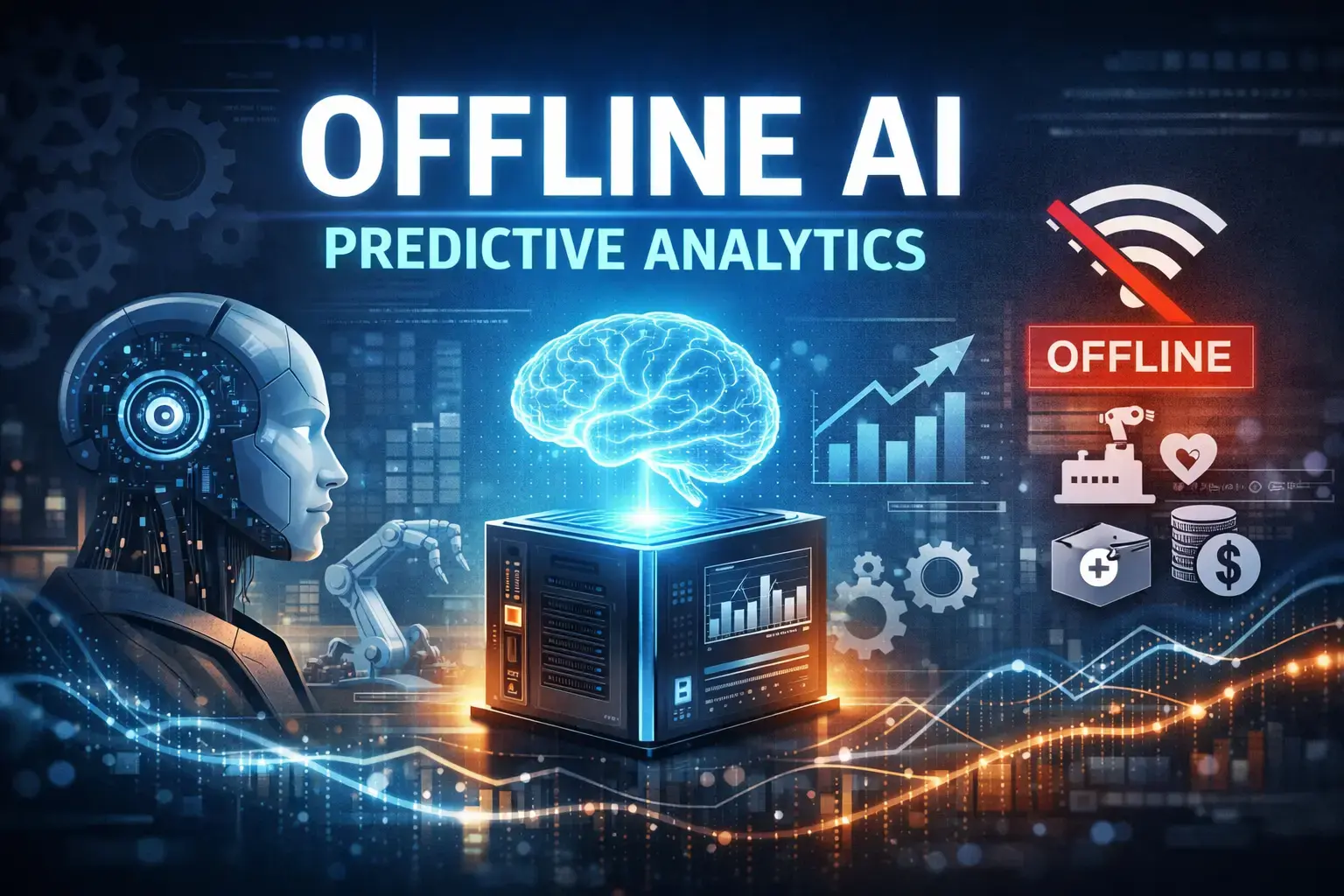
Offline AI refers to artificial intelligence systems that operate without a continuous internet connection. In the context of predictive analytics, Offline AI processes historical and real-time data locally, generating forecasts, patterns, and recommendations directly on a device or internal server.
Unlike cloud-based AI solutions, offline predictive analytics ensures data privacy, low latency, and operational stability, even in environments with limited or no connectivity.
Why Offline Predictive Analytics Is Gaining Popularity
As businesses increasingly rely on data-driven decision-making, the limitations of always-online AI models become more apparent. Offline AI offers several critical advantages:
-
Data Security and Privacy
Sensitive data never leaves the local environment, reducing compliance and cybersecurity risks. -
Low Latency and High Performance
Predictions are generated instantly without network delays. -
Operational Independence
AI models continue to work during network outages or in remote locations. -
Cost Optimization
Reduced cloud infrastructure and data transfer costs.
These benefits make offline predictive analytics particularly valuable for industries requiring reliability, confidentiality, and real-time insights.
How Offline AI Predictive Analytics Works
Offline predictive analytics typically follows this workflow:
1. Data Collection
Historical and real-time data is gathered from local databases, sensors, or internal systems.
2. Model Training
AI models are trained either locally or pre-trained in secure environments and deployed offline.
3. Inference and Prediction
The model analyzes data to forecast trends, detect anomalies, or predict outcomes.
4. Continuous Learning (Optional)
Periodic updates or retraining occur when connectivity becomes available.
This approach allows organizations to maintain advanced analytics capabilities without relying on constant cloud access.
Key Use Cases of Offline Predictive Analytics
Offline AI is transforming multiple sectors:
Manufacturing and Industrial Automation
-
Predictive maintenance
-
Equipment failure forecasting
-
Quality control optimization
Healthcare
-
Patient risk assessment
-
Medical device monitoring
-
Diagnostic support in remote areas
Finance and Banking
-
Fraud detection
-
Credit risk assessment
-
Transaction pattern analysis
Retail and Logistics
-
Demand forecasting
-
Inventory optimization
-
Route and delivery prediction
Offline AI vs Cloud-Based Predictive Analytics
| Feature | Offline AI | Cloud-Based AI |
|---|---|---|
| Internet dependency | Not required | Required |
| Data privacy | Very high | Medium |
| Latency | Minimal | Network-dependent |
| Scalability | Device-limited | Highly scalable |
| Operating cost | Lower long-term | Subscription-based |
Many enterprises adopt hybrid AI architectures, combining offline predictive analytics with cloud capabilities for maximum flexibility.
Challenges of Offline Predictive Analytics
While powerful, offline AI also presents challenges:
-
Limited computational resources on edge devices
-
Model update complexity
-
Storage constraints for large datasets
Modern optimization techniques, lightweight ML models, and edge AI frameworks effectively address these limitations.
The Future of Offline AI Predictive Analytics
With the rise of edge computing, IoT, and privacy-focused regulations, offline predictive analytics is becoming a strategic priority for businesses worldwide. Organizations that invest in offline AI solutions gain resilience, control, and faster insights—without sacrificing intelligence.
Why Choose Offline AI Solutions from Soft.CY?
At Soft.CY, we design and implement custom Offline AI and Predictive Analytics solutions tailored to your business needs. Our expertise ensures:
-
Secure on-device AI models
-
High-performance predictive systems
-
Seamless integration with existing infrastructure
-
Scalable and future-ready architectures
Offline intelligence is not a limitation—it is a competitive advantage.