
AI Development
AI development services that help businesses automate workflows, analyze data, and create intelligent digital products. We build custom AI-powered solutions including predictive analytics, smart automation, recommendation systems, AI widgets, and machine learning integrations tailored to your business goals. Our team develops scalable, secure, and high-performance AI applications that improve efficiency, user experience, and business growth.
AI development focuses on building intelligent systems that can analyze data, learn from patterns, and make automated decisions with minimal human intervention. By leveraging machine learning, deep learning, and advanced data processing techniques, businesses can transform raw data into actionable insights and scalable automation solutions.
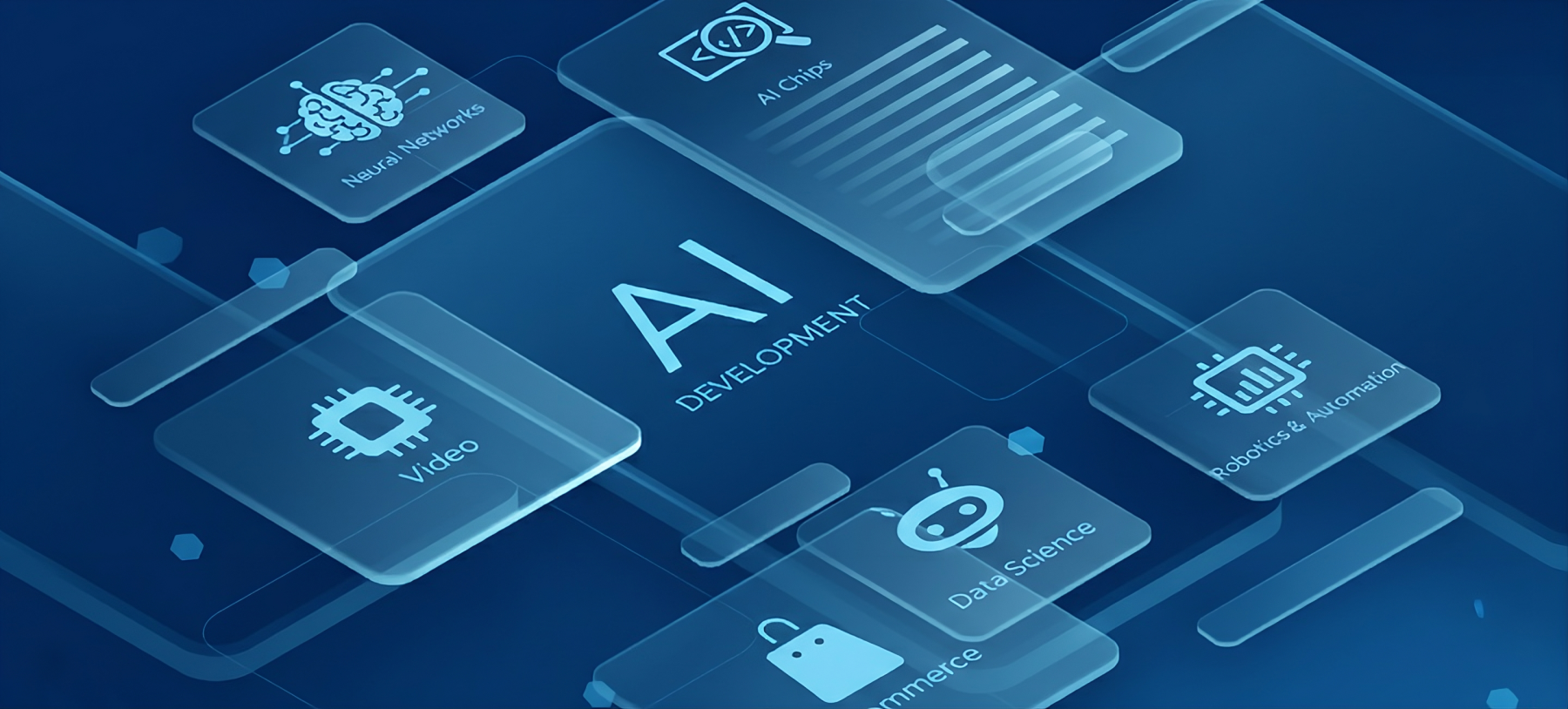
The AI development process typically begins with data collection and preparation. High-quality, well-structured data is essential for training accurate models. Data scientists perform data cleaning, labeling, and feature engineering to ensure optimal model performance. From there, appropriate algorithms are selected and trained, whether for predictive analytics, recommendation systems, computer vision, or natural language processing.
Modern AI solutions often rely on powerful frameworks and platforms such as TensorFlow, PyTorch, and cloud-based AI services. Models are trained, validated, and optimized to achieve high accuracy and efficiency. Once deployed, AI systems require continuous monitoring, retraining, and performance tuning to adapt to new data and evolving business conditions.
AI development can include a wide range of applications: intelligent chatbots, personalization engines, fraud detection systems, predictive maintenance, image and speech recognition, and advanced analytics platforms. These solutions help automate repetitive tasks, improve decision-making speed, and uncover hidden opportunities within large datasets.
A key part of AI implementation is integration. AI models must seamlessly connect with existing software architecture, APIs, and databases. Scalable infrastructure, often powered by cloud computing and containerization, ensures that AI systems can handle increasing workloads while maintaining performance.
Security, transparency, and ethical considerations are also fundamental. Responsible AI development includes bias mitigation, explainable AI models, and compliance with data protection regulations to ensure fairness and trustworthiness.
Ultimately, AI development enables businesses to innovate faster, enhance operational efficiency, and create smarter digital products. By strategically implementing artificial intelligence, companies gain a competitive advantage and unlock new growth opportunities in an increasingly data-driven world.
In addition to the core development process, AI solutions can be tailored to meet specific business objectives across different industries. Whether the goal is improving operational efficiency, enhancing customer engagement, reducing costs, or increasing revenue, AI systems can be customized to align with strategic priorities and long-term growth plans.
Comprehensive AI services may include:
- Custom AI solution development
- Machine learning model design and training
- Deep learning implementation
- Natural language processing (NLP) solutions
- Computer vision systems
- Predictive analytics and forecasting
- Intelligent process automation
- AI-powered recommendation systems
- Data engineering and preparation
- Model deployment and cloud integration
- Ongoing monitoring, maintenance, and optimization
Successful AI adoption also requires careful planning and collaboration between technical teams and business stakeholders. From defining clear objectives and KPIs to ensuring data quality and system scalability, every stage of development plays a crucial role in delivering measurable results.
Moreover, AI systems can evolve over time. With continuous learning capabilities and performance evaluation, organizations can refine their models, adapt to changing market conditions, and unlock additional value from their data assets. This long-term approach ensures that AI investments remain sustainable and impactful.
By combining advanced technologies with strategic implementation, AI development becomes not just a technical initiative, but a powerful business transformation tool that drives innovation, efficiency, and competitive growth.