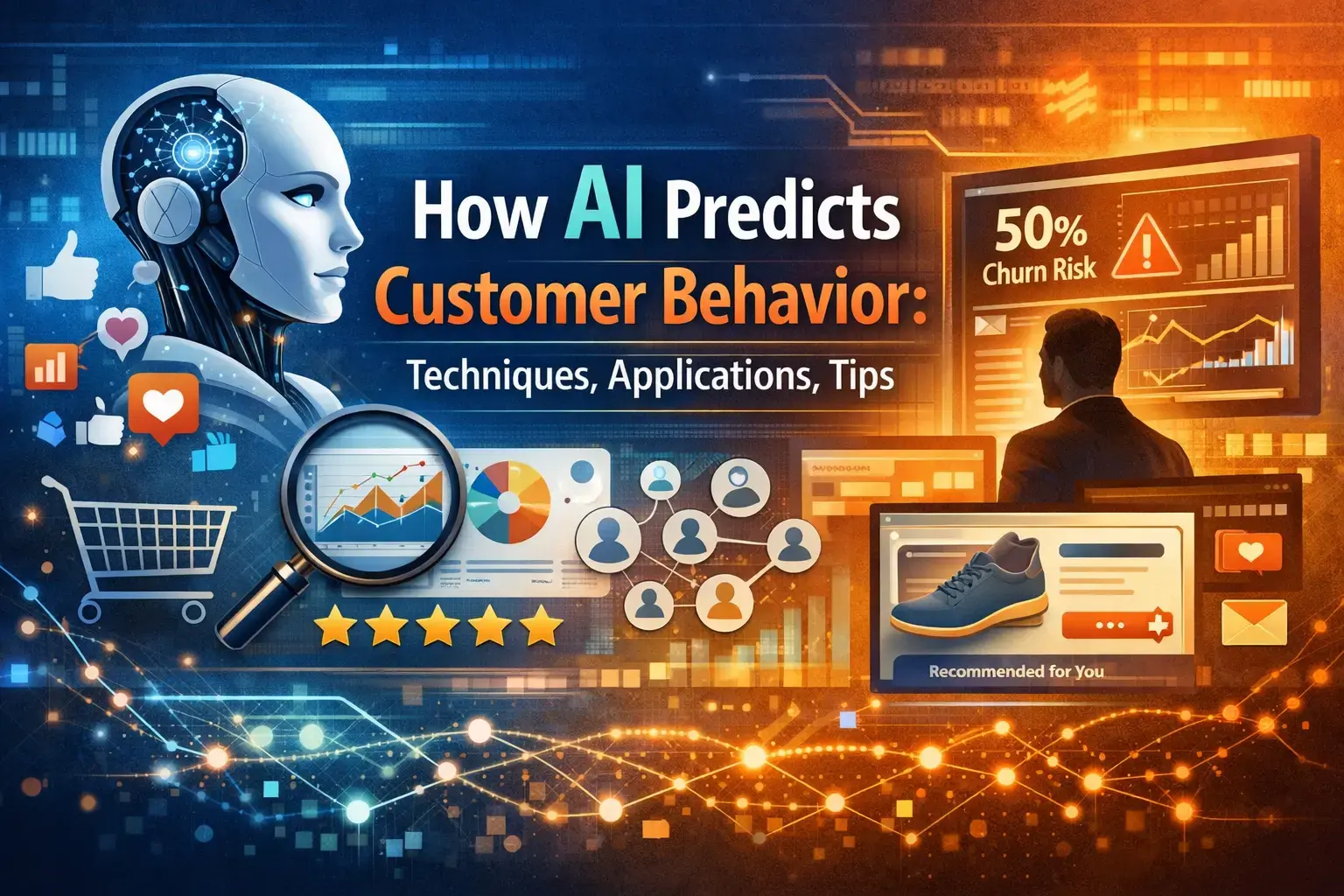
How AI Predicts Customer Behavior: Techniques, Applications, Tips
9 months agoIntroduction
In today’s highly competitive business environment, understanding customer behavior is no longer optional—it’s essential. Companies that can anticipate what their customers want, when they want it, and how they interact with products gain a significant advantage over competitors. Artificial Intelligence (AI) plays a pivotal role in this process by analyzing large volumes of data, uncovering hidden patterns, and providing actionable insights that guide strategic decisions.
By leveraging AI, businesses can move from reactive strategies to proactive, data-driven approaches that improve customer satisfaction, increase sales, and reduce churn rates. This article explores how AI predicts customer behavior, the key techniques involved, real-world applications, and practical tips for businesses looking to harness AI for marketing and operational success.
Understanding AI in Customer Behavior Prediction
AI predicts customer behavior by combining machine learning, data analytics, and predictive modeling. Businesses can gather data from multiple sources, including:
-
Purchase history
-
Browsing patterns on websites or mobile apps
-
Social media interactions
-
Customer feedback and reviews
-
CRM data and support tickets
Once this data is collected, AI algorithms identify trends and patterns that might be difficult—or even impossible—for humans to detect. For example, AI can predict which customers are likely to buy a new product, when a customer might churn, or which marketing message is most likely to resonate with a specific segment.
Key AI Techniques for Predicting Customer Behavior
Several AI techniques have proven especially effective in predicting customer behavior:
1. Predictive Analytics
Predictive analytics uses historical data to forecast future behavior. It allows businesses to:
-
Identify high-value customers likely to make repeat purchases
-
Predict purchase frequency or product demand
-
Detect trends before they become obvious, helping to optimize inventory and marketing strategies
Machine learning models, such as regression analysis, decision trees, or neural networks, analyze past behavior to make accurate predictions about future actions.
2. Recommendation Systems
Recommendation systems analyze customer actions and preferences to deliver personalized suggestions. Popular examples include:
-
Amazon’s product recommendations based on browsing and purchase history
-
Netflix suggesting shows based on viewing patterns
By tailoring recommendations, businesses enhance the user experience, increase conversion rates, and strengthen customer loyalty.
3. Customer Segmentation
AI enables businesses to segment their customers based on:
-
Behavioral patterns (purchase frequency, engagement)
-
Preferences (product types, content consumption)
-
Demographics (age, location, income)
Segmentation allows marketers to create targeted campaigns, increasing engagement and ROI. Instead of generic messaging, companies can deliver relevant content to specific groups, resulting in higher click-through rates and customer retention.
4. Sentiment Analysis
Sentiment analysis evaluates customer opinions expressed in:
-
Product reviews
-
Social media posts
-
Customer surveys and feedback forms
By analyzing sentiment, AI helps companies gauge public perception, identify areas for improvement, and respond proactively to complaints. Sentiment analysis also allows marketers to detect early signals of dissatisfaction, reducing the risk of negative word-of-mouth.
5. Churn Prediction Models
Churn prediction models identify customers at risk of leaving a service or brand. By analyzing usage patterns, interaction frequency, and satisfaction scores, businesses can implement retention strategies, such as targeted offers, loyalty programs, or personalized communication.
Real-World Applications of AI in Predicting Customer Behavior
AI is transforming multiple industries by providing insights into customer behavior that drive measurable results.
E-commerce
AI predicts which products a customer is most likely to purchase next, delivering personalized recommendations in real time. This increases average order value, enhances the shopping experience, and reduces cart abandonment rates. AI also helps optimize pricing strategies by analyzing competitor pricing, demand fluctuations, and seasonality.
Retail
Retailers use AI to forecast inventory needs, ensuring shelves are stocked with the right products at the right time. By understanding customer behavior, retailers can reduce stockouts and overstock situations, improve supply chain efficiency, and enhance overall profitability.
Banking and Financial Services
Banks leverage AI to predict:
-
Which clients are at risk of closing accounts
-
Fraudulent transactions by detecting unusual behavior patterns
-
Opportunities for cross-selling financial products
By using AI, financial institutions can maintain client relationships, prevent losses, and create more personalized services.
Telecommunications
AI predicts customer behavior related to subscription usage, plan upgrades, and service cancellations. Telecom companies can proactively offer promotions or adjust service plans to reduce churn and improve customer satisfaction.
Healthcare
In healthcare, AI predicts patient behavior such as adherence to medication or likelihood of appointment no-shows. Providers can improve patient engagement, outcomes, and operational efficiency.
Challenges and Considerations
While AI offers significant advantages, businesses must address several challenges:
- Privacy and Data Security
Collecting and analyzing customer data requires strict adherence to data privacy regulations, such as GDPR or CCPA. Businesses must ensure that data is securely stored, anonymized where appropriate, and used ethically. - Accuracy and Bias
AI predictions are only as good as the data and algorithms used. Poor-quality or biased datasets can lead to incorrect predictions, resulting in misguided business decisions. Continuous monitoring and validation of AI models are essential to maintain accuracy. - Integration and Complexity
Implementing AI solutions often requires technical expertise and system integration. Small businesses may face resource challenges when adopting advanced AI technologies.
Practical Tips for Businesses Implementing AI
To maximize the benefits of AI in predicting customer behavior, companies should follow these practical steps:
1. Start with Clean, Structured Data
Ensure that your customer data is:
-
Accurate and up-to-date
-
Properly formatted and structured
-
Free of duplicates or inconsistencies
High-quality data improves AI model accuracy and reliability.
2. Choose the Right AI Tools
Not all AI solutions fit every business. Evaluate tools based on:
-
Scalability and integration capabilities
-
Cost-effectiveness
-
Support for your specific industry and business objectives
3. Continuously Monitor and Refine AI Models
Customer behavior evolves over time. Regularly review AI predictions, assess their accuracy, and adjust algorithms as needed. This ensures that models remain relevant and effective.
4. Focus on Explainable AI
Explainable AI (XAI) helps businesses understand why AI made certain predictions. Transparent models build trust with stakeholders and improve decision-making processes.
5. Combine AI with Human Expertise
AI is a powerful tool, but human insights are crucial for interpreting predictions and making strategic decisions. Teams should use AI to augment, not replace, human judgment.
Future Trends in AI-Driven Customer Behavior Prediction
AI continues to evolve rapidly, with emerging trends likely to shape customer behavior prediction in the coming years:
-
Real-time AI analytics: Predicting customer needs and delivering personalized experiences instantly
-
Multimodal AI: Integrating text, images, voice, and video for deeper insights
-
AI-powered chatbots and virtual assistants: Engaging customers proactively and gathering behavioral data
-
Emotion recognition: Using AI to detect emotions via facial expressions or voice to tailor marketing strategies
Businesses that adopt these trends early can gain a competitive edge and strengthen customer relationships.
Conclusion
Artificial Intelligence is transforming how businesses understand and predict customer behavior. By leveraging machine learning, predictive analytics, recommendation systems, and sentiment analysis, companies can deliver personalized experiences, optimize strategies, and stay ahead of the competition.
Investing in AI-driven insights is not merely a technological upgrade; it is a strategic move to deepen customer relationships, increase sales, and drive long-term business growth. By addressing challenges related to data quality, bias, and privacy, and by combining AI with human expertise, businesses can fully unlock the potential of AI in understanding and anticipating customer needs.